The New Romantics
"Between the Waters" at the Whitney

The Romantic notion of art is rooted in the power of nature, and the profound awe of the sublime. This came from an artistic reaction to the Enlightenment in seventeenth-century Europe, and one could argue that many artists are in a similar position today. In a world that is ruled by technology, order, and constant progress, the planet and its occupants suddenly become flat and shrunken.
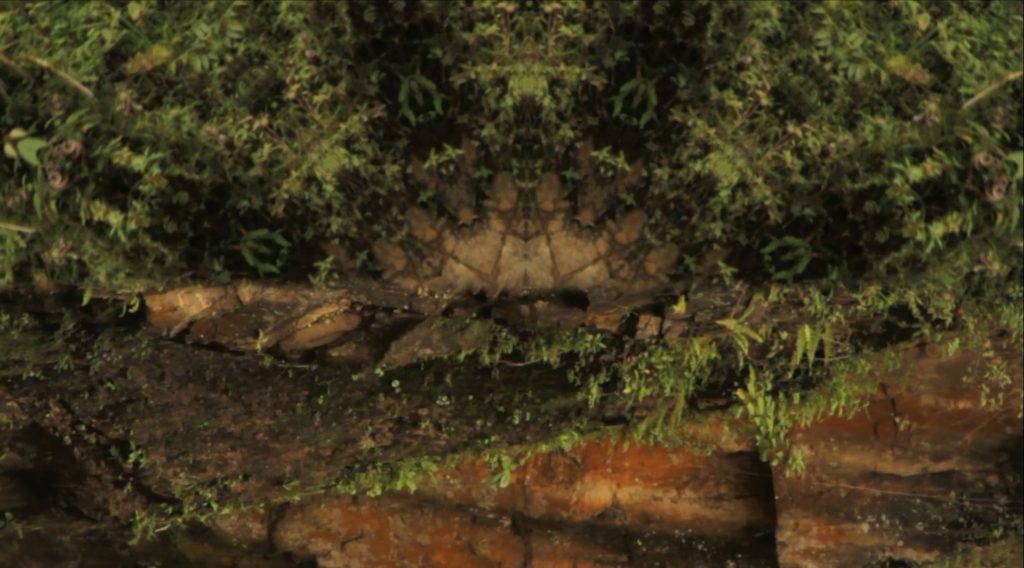
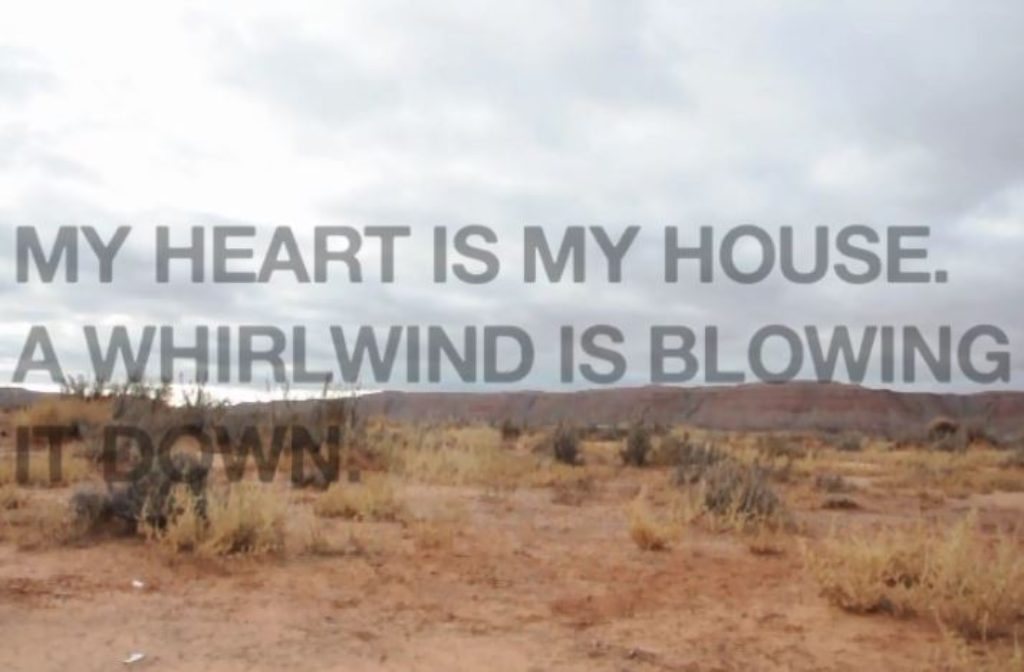
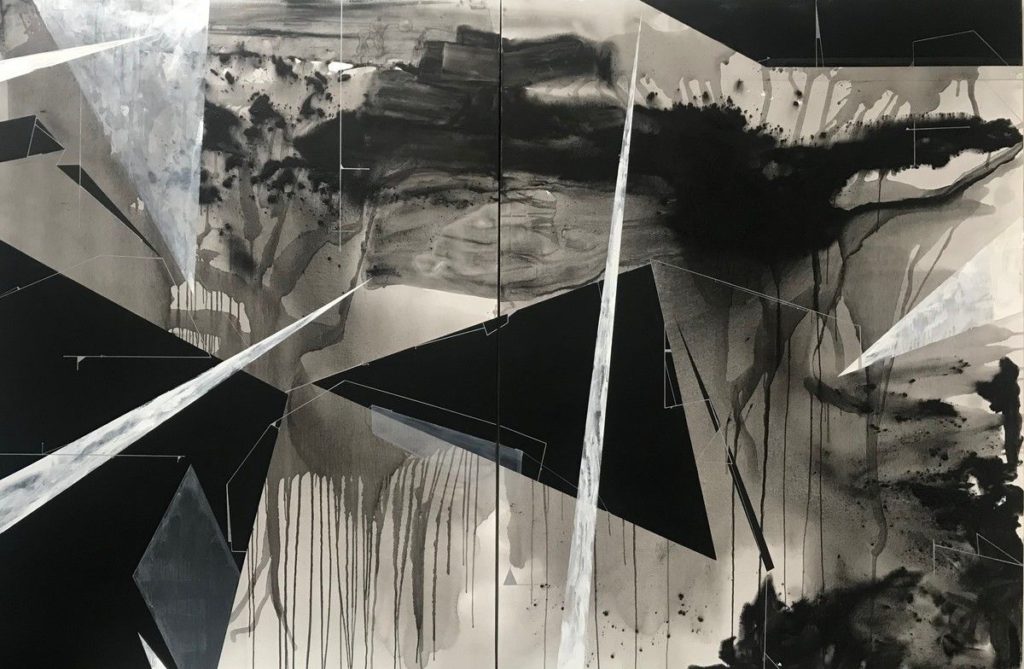
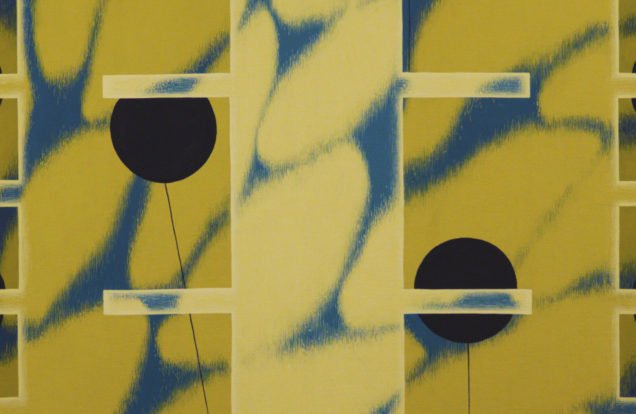
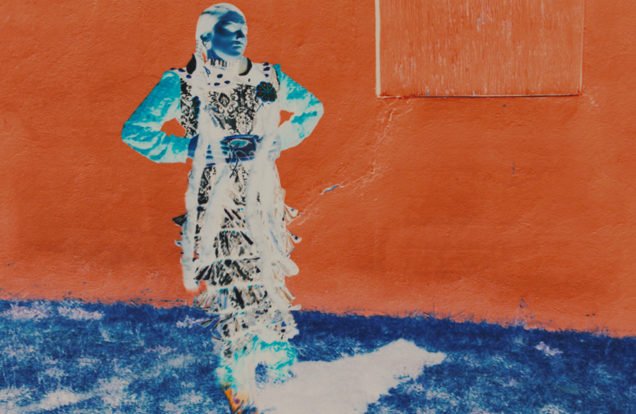
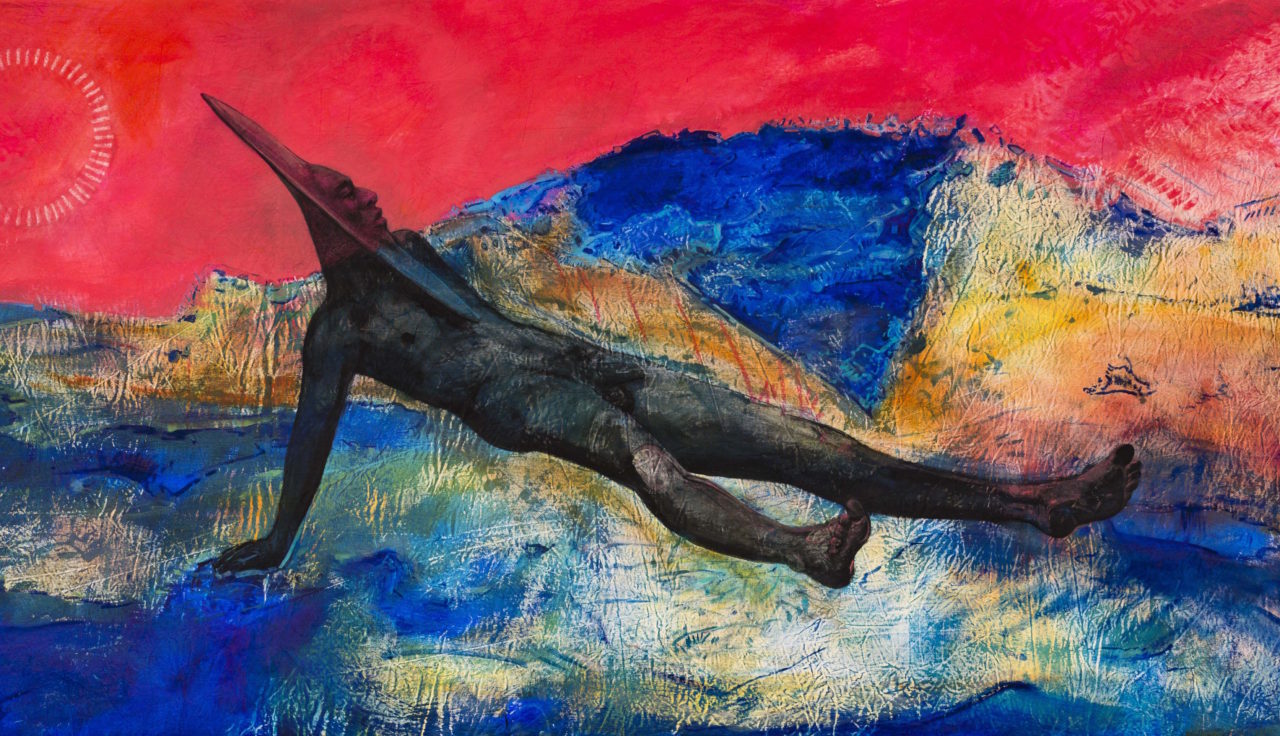
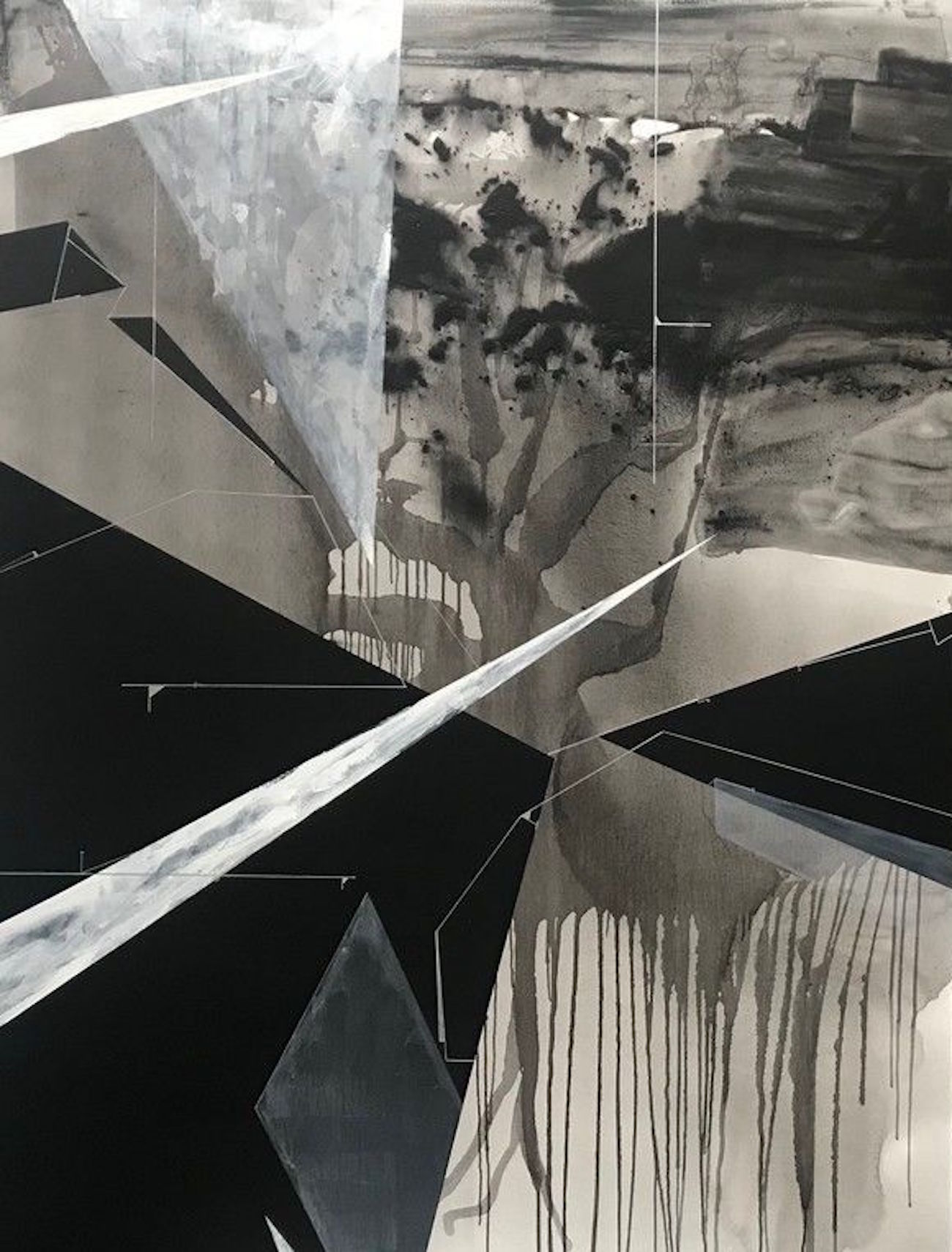
Between the Waters at the Whitney Museum of American Art is a group exhibition which reads as a deeply personal, Romantic approach to reckoning with the world around us, specifically the natural world. The artists in the show include Carolina Caycedo, Demian DinéYazhi´ and Ginger Dunnill, Torkwase Dyson, Cy Gavin, Lena Henke, and Erin Jane Nelson. All of these artists are interested in the world and the environment, but as the museum’s press release notes, “these artists adopt a highly subjective position, embracing emotion, intuition, spirituality, and myth to help understand our intrinsic place within the ‘natural’ world.” Obviously, this isn’t your usual exhibition that apes as advocacy or protest.
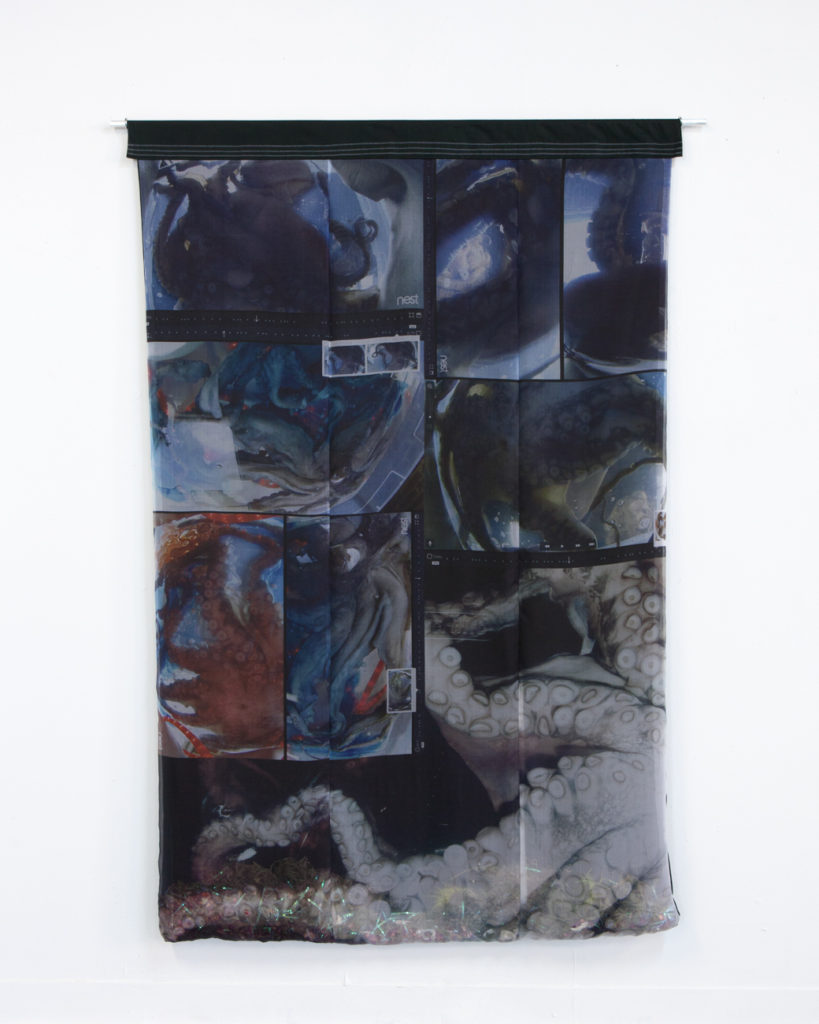
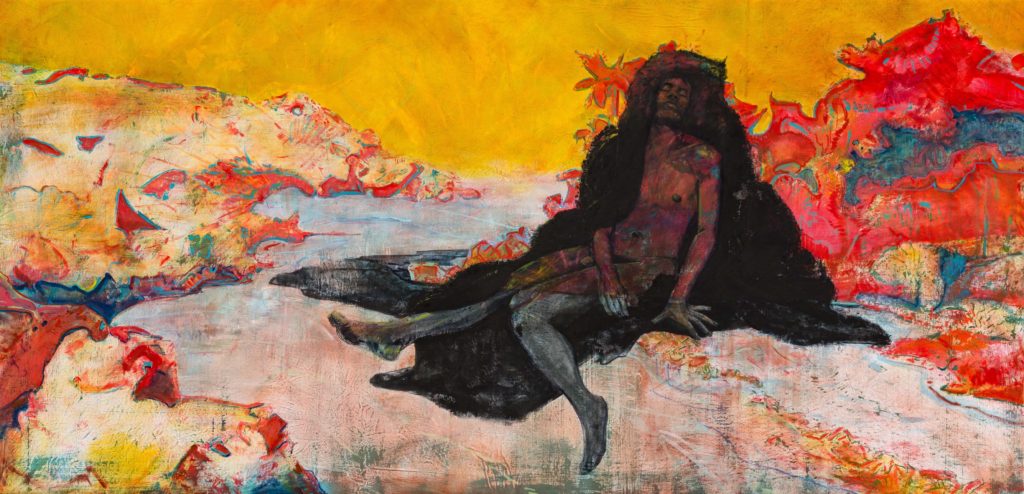
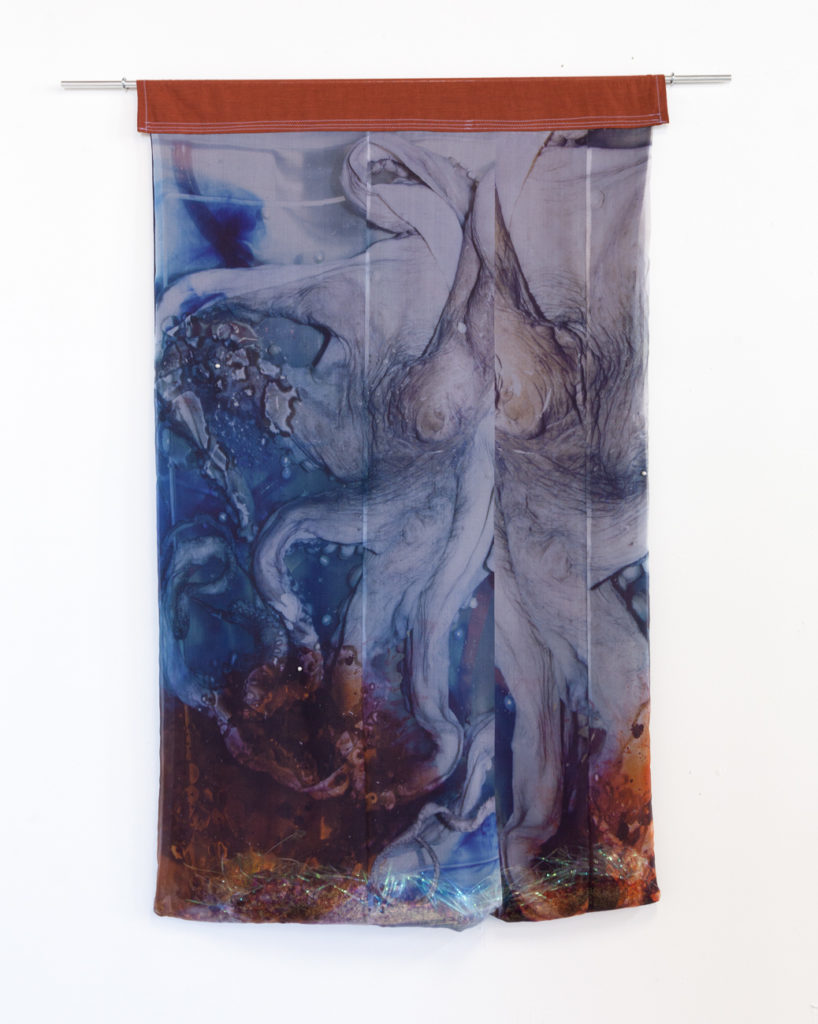
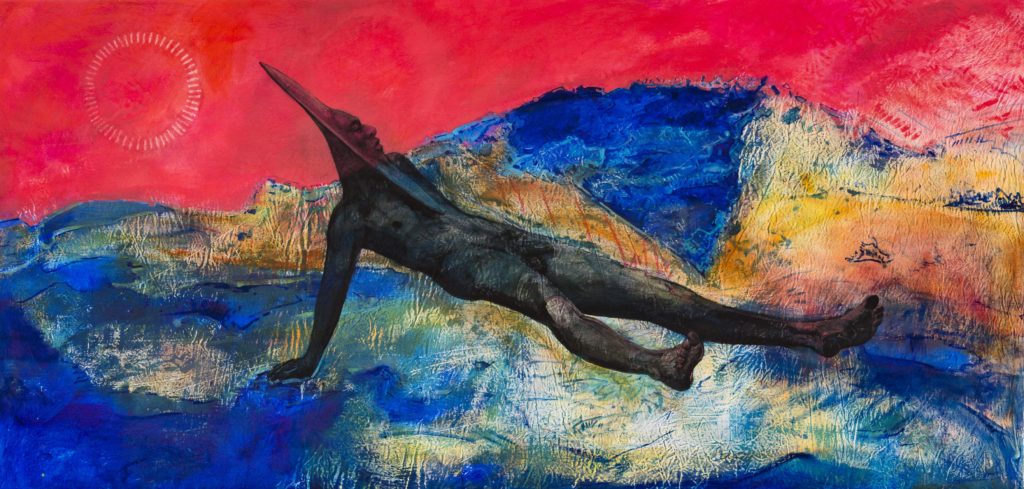
This show is a nuanced and layered in its approach. All of the work here relies on history, craft making, and plenty of other mediums to somehow understand how one survives, and how our earth survives, in its current state. Maybe we’ll be swallowed by the oceans, as suggested by Erin Jane Nelson’s textiles. Perhaps its like Cy Gavin’s paintings where we are placed in some sort of utopia where colonialism has never reached (and destroyed) its shores. Or we could all be wrong since the world has its own plans.
That’s why I brought up Romanticism in the first place. All of these artists are grappling with their realities and their possible futures. Reason and logic has its limits, as history has shown us, and sometimes it is better to process yourself and your surroundings in a more complex, visceral manner.